Slow Days in Haenam: A Daeheungsa Temple Stay, Autumn Sweet Potato Fields and the Maemseom Rocks at Ttangkkeut
Photos in this guide are AI-generated images of fictional POPORO CITY characters, made to illustrate the places; they are not real travel photos. Opening hours, prices and transport details change, so please check official sources before you go.
Haenam, in South Jeolla Province, sits at the far southwestern corner of the Korean peninsula, and it moves at a different speed from Seoul or Busan. Our Haenam travel guide covers the big three: the Ttangkkeut ("land's end") area, the cliffside temple of Mihwangsa and the mountain temple of Daeheungsa. This spin-off slows down even more, with three experiences built around those places: spending a night inside Daeheungsa on a temple stay, walking the red-earth farm fields that make Haenam famous across Korea, and waiting by the sea for the light between the two Maemseom rocks.
1. A temple stay at Daeheungsa
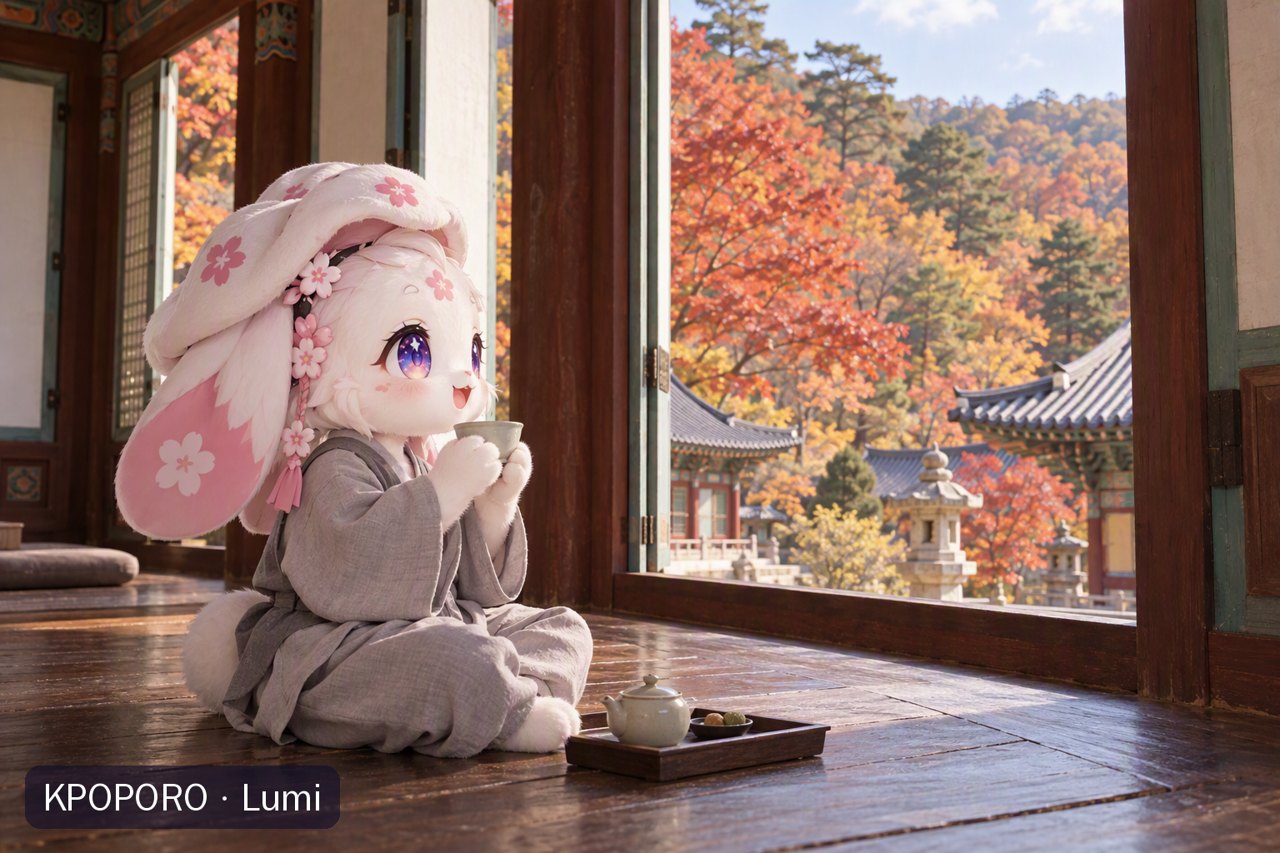
What it is: Daeheungsa is a large, old Buddhist temple in a forested valley on Duryunsan mountain. It is one of the seven mountain monasteries inscribed together on the UNESCO World Heritage List in 2018 as "Sansa, Buddhist Mountain Monasteries in Korea". Like many Korean temples, it runs a temple stay program, where visitors sleep in simple guest rooms, wear loose temple clothes and join parts of the daily rhythm: an evening service, a quiet talk over tea with a monk, meditation and, for early risers, the dawn ceremony with the great drum and bell.
Getting there: Daeheungsa is a short drive or local bus ride from Haenam town, where the intercity bus terminal is. From the temple car park and bus stop, a pleasant walk along a stream under old trees leads to the main halls; allow some time for it, as the approach is part of the experience.
Best time: autumn, when the valley turns red and gold, is the most popular season, and spring is also lovely. Programs run year-round, but weekends in the leaf season fill early, so book in advance.
Tips: reservations are made through the national Templestay website or the temple itself; programs range from a simple overnight stay with free time to a more structured schedule, so read what each one includes. Bring warm socks and a light layer, because mountain nights are cool and floors are traditional. Meals are vegetarian temple food, eaten quietly, and you are expected to finish what you take. Keep your voice low around the halls, and ask before photographing monks or services.
2. The farm fields of Haenam in autumn
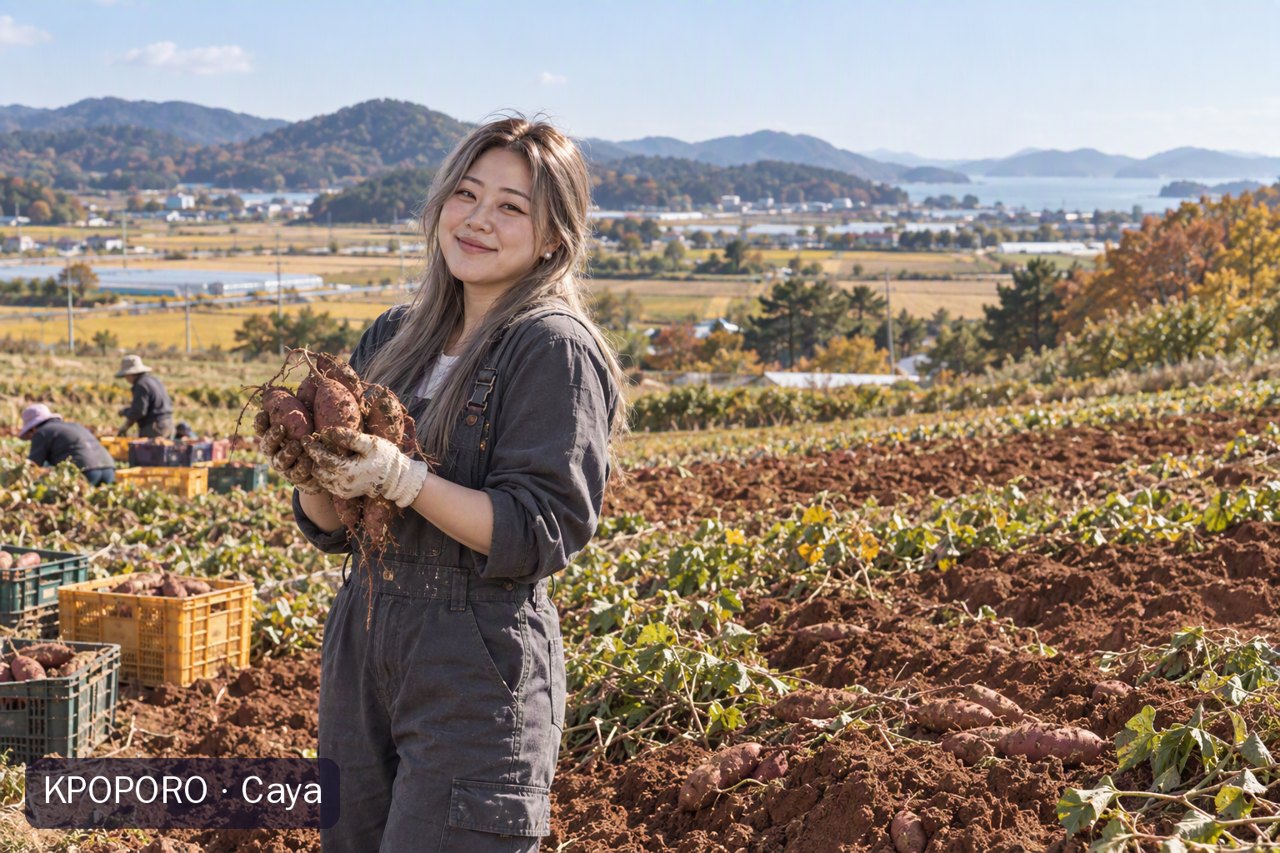
What it is: drive anywhere in Haenam and you notice the soil: a deep reddish earth, spread across wide, gentle fields that open toward the sea. The county is one of Korea's major farming areas, and its sweet potatoes in particular are known nationwide; you will see "Haenam sweet potato" on market stalls and snack packs far from here. Winter cabbage for kimchi, garlic and other vegetables also grow on these fields, and the landscape changes with each crop.
Getting there: there is no single "farm sight"; the fields line the country roads between Haenam town, Daeheungsa and the southern coast, so the best way to see them is on the way between the other two places in this guide. With a rental car you can stop at a quiet roadside; by bus, the views from the window are already a good part of the trip.
Best time: early to mid autumn is sweet potato harvest season, when you may see families digging in the red rows; winter brings green cabbage fields, which stay in the ground through the cold months.
Tips: the fields are private farms, so do not walk into planted rows or pick anything, and park only where you do not block farm machinery. To taste the harvest, look for roast sweet potatoes, local markets in Haenam town and the county's specialty shops. Haenam is also known in Korea for generous South Jeolla home cooking, so a simple local restaurant with many side dishes (banchan) is worth seeking out.
3. The Maemseom rocks at Ttangkkeut
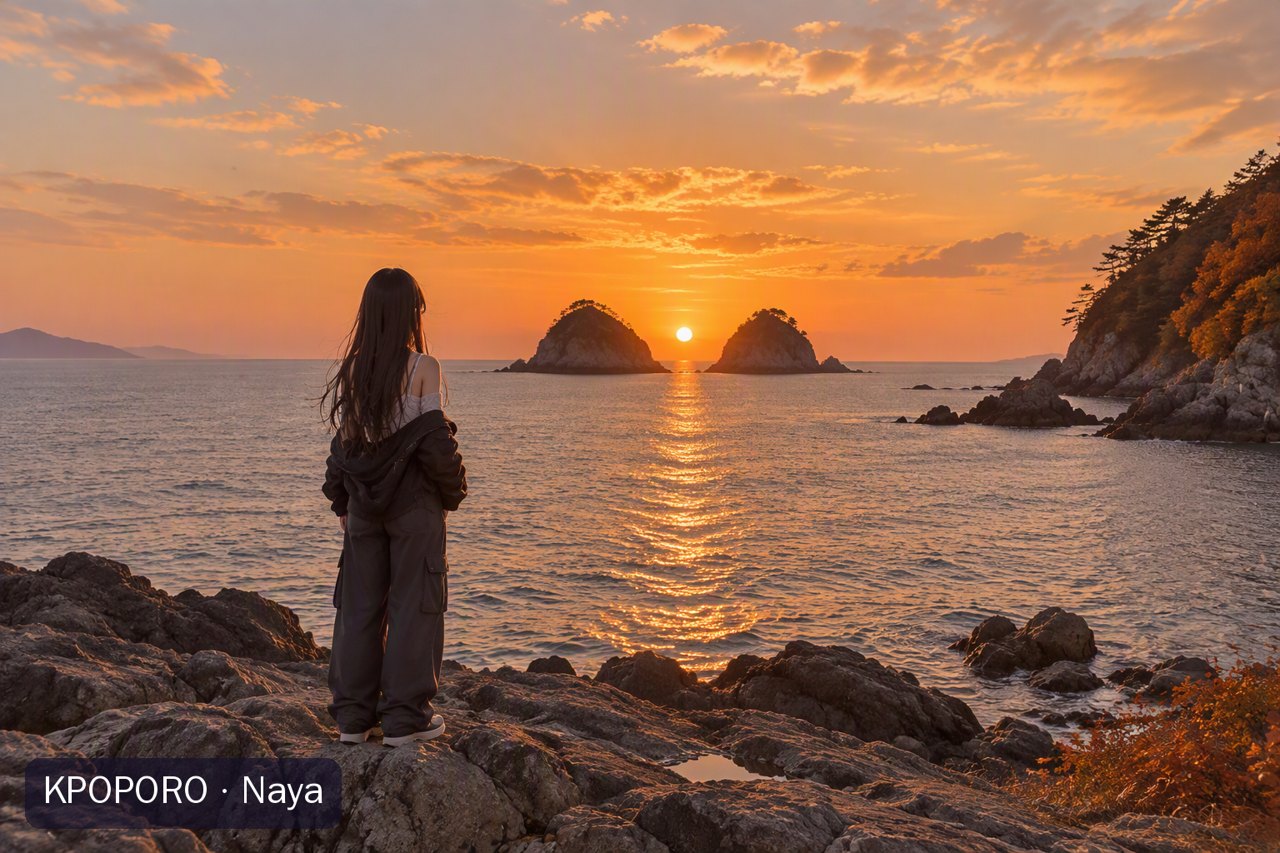
What it is: Ttangkkeut, at the southern end of Haenam, is promoted as the southernmost point of the Korean mainland, with an observatory tower, a coastal walking trail and a small monument at the tip. Near Ttangkkeut village, two small rocky islets called Maemseom sit just offshore, side by side. They are famous among photographers because at certain times of the year, around February and October, the sun rises in the narrow gap between them. Even on other days, the pair of rocks with fishing boats and island silhouettes behind them is one of Haenam's most memorable views, at sunrise or in the last light of evening.
Getting there: Ttangkkeut is roughly an hour by car from Haenam town; there are also local buses to Ttangkkeut village, but they are infrequent, so check the timetable at the Haenam terminal and plan your return. The rocks are right by the village harbor, a short walk from the parking area. The village is also where ferries leave for Bogildo and Nohwado, and some routes connect toward the island area around Wando.
Best time: if you want the famous sun-between-the-rocks moment, look up the expected dates for the current year with the county's tourism information, arrive early and be ready for clouds to decide for you. Weekday mornings are calmer than weekends.
Tips: staying overnight in or near the village makes an early morning much easier than driving down before dawn. Bring a windproof jacket: the coast is breezy even when town is mild. Combine the rocks with the observatory and the trail to the land's end monument, then go up to Mihwangsa for sunset, as suggested in the main guide.
Putting it together
- Two nights: night one as a temple stay at Daeheungsa; on day two drive or bus south through the farm fields to Ttangkkeut and Mihwangsa; night two near Ttangkkeut for a sunrise at Maemseom.
- Getting to Haenam: intercity and express buses run to Haenam town from Seoul and Gwangju; another common route is the KTX to Mokpo, then a bus or car to Haenam.
- Car or bus: the region is spread out; a rental car gives you the most freedom, while buses work if you plan around their schedules.
- Season: autumn gives you leaves at Daeheungsa, harvest fields and the October Maemseom sunrise period on one trip.
Our fictional POPORO CITY characters show the mood: Lumi pausing over a cup of tea in temple clothes while the forest moves outside, Caya, an urban-farmer character, holding a handful of fresh Haenam sweet potatoes, and Naya watching the light over the sea between the two rocks. For Mihwangsa and the full route, go back to the main Haenam guide.
More travel planning: POPORO BLOG. Our characters also share Korean-language trip notes on the KPOPORO Naver blog.