Lagniappe: A Tiny Gift That Carries the World
🎵 Meet the Song
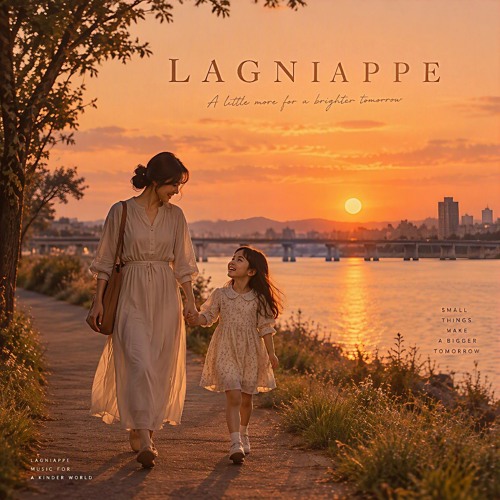
LAGNIAPPE unfolds like a breath held too long—soft, sincere, and tenderly released. The song arrives not with fanfare, but with the quiet certainty of something long forgotten returning. It speaks of small things: a crumpled wrapper, a hidden candy, a hand reaching without words. These aren’t grand gestures, but the kind of moments that linger in the soul long after the noise fades. The title, *Lagniappe*, is a word rooted in Creole culture—meaning a small gift given unexpectedly, a bonus, a little extra. In this song, it becomes a metaphor for the quiet kindnesses that carry us through the cold parts of life.
Each note feels like a memory gently stirred. The melody doesn’t rush, but drifts, like sunlight through a window late in the day. There’s a sense of return—not to a place, but to a feeling. The lyrics whisper of someone hidden in the depths of a bag, not physically, but emotionally: a presence that has always been there, waiting to be noticed. It’s not about grand romance or dramatic change, but about the steady, unspoken love that remains, even when we forget to look. The song is a quiet embrace, a reminder that we are never truly alone.
📖 The Story Behind It
Though no official narrative is shared, the lyrics paint a vivid emotional landscape. They suggest a journey inward—a return to a moment of comfort buried beneath the weight of daily life. The image of rummaging through a heavy bag, only to find a small, forgotten candy, is more than a metaphor; it’s a symbol of rediscovery. That candy, sweet and simple, becomes a vessel for deeper meaning: a taste of home, of care, of a love that never left, even when forgotten.
The repeated mention of a “warm heart” and “a hand that holds without speaking” hints at a deep, enduring bond—possibly maternal, possibly from a long-lost friend, or even a part of oneself once hidden. The song feels like a letter written in silence, addressed to someone who has always been there. It speaks of a love that doesn’t demand attention, but simply exists. There’s a quiet pride in calling the gift “small,” yet declaring it “bigger than anything in the world.” In this way, the song becomes a celebration of the unassuming, the overlooked, and the quietly powerful.
🎧 What to Listen For
This is a song that rewards close listening, not for complexity, but for emotional texture. It invites you to slow down and notice the small things—the way a line of lyrics can echo like a memory, or how a phrase lingers in the air after it’s sung. The mood is reflective, gentle, and deeply personal. There’s a sense of softness, not fragility—like a blanket wrapped around someone who’s been cold for too long.
The vocal delivery feels intimate, as if the singer is speaking to one person, even if the words are shared with the world. There’s no need to shout; the emotion lives in the pauses, in the way a breath is held before a line is sung. The lyrics touch on themes of memory, gratitude, and quiet resilience. They suggest that healing isn’t always loud or sudden—it can come from a single, unexpected moment of recognition: *I’m not alone. I’ve never been.* This is the song’s quiet power: it doesn’t solve anything, but it reminds you that you’re held.
🌏 One Song, Many Languages
LAGNIAPPE is not just a song—it’s a bridge. Through six language versions, it carries the same tender message across cultural boundaries. In English, the intimacy remains untouched, the words still soft and searching. In Spanish, the rhythm feels slightly warmer, the vowels flowing like a gentle breeze. The French version carries a poetic elegance, each phrase like a brushstroke on a quiet canvas. The Japanese rendition feels delicate, almost haiku-like in its restraint, while the Chinese version breathes with a quiet, flowing grace.
The Korean version, sung in the original language, holds a particular resonance—its natural cadence aligning perfectly with the emotional weight of the lyrics. Each version is not a translation, but a new expression of the same feeling: the comfort of being seen, even when you’ve forgotten yourself. The fact that the same song exists in so many tongues speaks to the universality of small kindnesses, of hidden love, and of gratitude for the unseen.
☕ When to Play It
This is a song for moments when the world feels too heavy. It’s perfect for late afternoons when the light slants through the window, or early mornings when the city is still quiet and you’re just beginning to wake. Play it when you’re walking home from work, shoulders tight, and suddenly remember a kind word from someone long ago. It’s for when you’re curled up with a book, or sitting in silence, and a memory stirs.
It’s also the kind of song you might play when you’re cooking, or folding laundry, or simply sitting still. It doesn’t demand attention, but it offers presence. There’s no need to be in a particular mood—this song meets you wherever you are. It’s not for parties or dancing, but for the quiet in between: the pause after a long day, the moment before sleep, the breath between thoughts.
💜 Final Notes
LAGNIAPPE is more than a song—it’s a gentle invitation to remember. To notice the small gifts that have always been there, the ones we’ve buried under routines, stress, and time. It speaks to the heart that has learned to keep its warmth hidden, and reminds it that it’s never been alone. The beauty of this song lies in its simplicity: no grand declarations, no dramatic shifts, just a quiet, persistent love that remains.
It’s a gift not just for the listener, but for the self—because sometimes, the most important thing we need is to be reminded that we are enough, that we are held, that even in the coldest moments, there is warmth. And if you’re listening, chances are you’re already holding it. Just like the candy in the bag, it was never lost—it was always there, waiting to be found.
🎵 Listen to every version
- LAGNIAPPE [ENG Ver.] · English
- LAGNIAPPE [SPA Ver.] · Spanish
- LAGNIAPPE [FRA Ver.] · French
- LAGNIAPPE [JPN Ver.] · Japanese
- LAGNIAPPE [CHN Ver.] · Chinese
- LAGNIAPPE [KOR Ver.] · Korean