Three Slow Moments in Spain: A Flamenco Night in Seville, Barceloneta at Sunset and the Patios of Córdoba
Photos in this guide are AI-generated images of fictional POPORO CITY characters, made to illustrate the places; they are not real travel photos. Opening hours, prices and transport details change, so please check official sources before you go.
Spain rewards travelers who slow down. Our Spain travel guide follows the classic line from Barcelona south to Ronda and Seville. This spin-off adds three moments that are easy to fit around it: a small flamenco show in Seville, a sunset walk on Barcelona's city beach, and a day trip by high-speed train to the courtyards of Córdoba.
1. A flamenco night in Seville
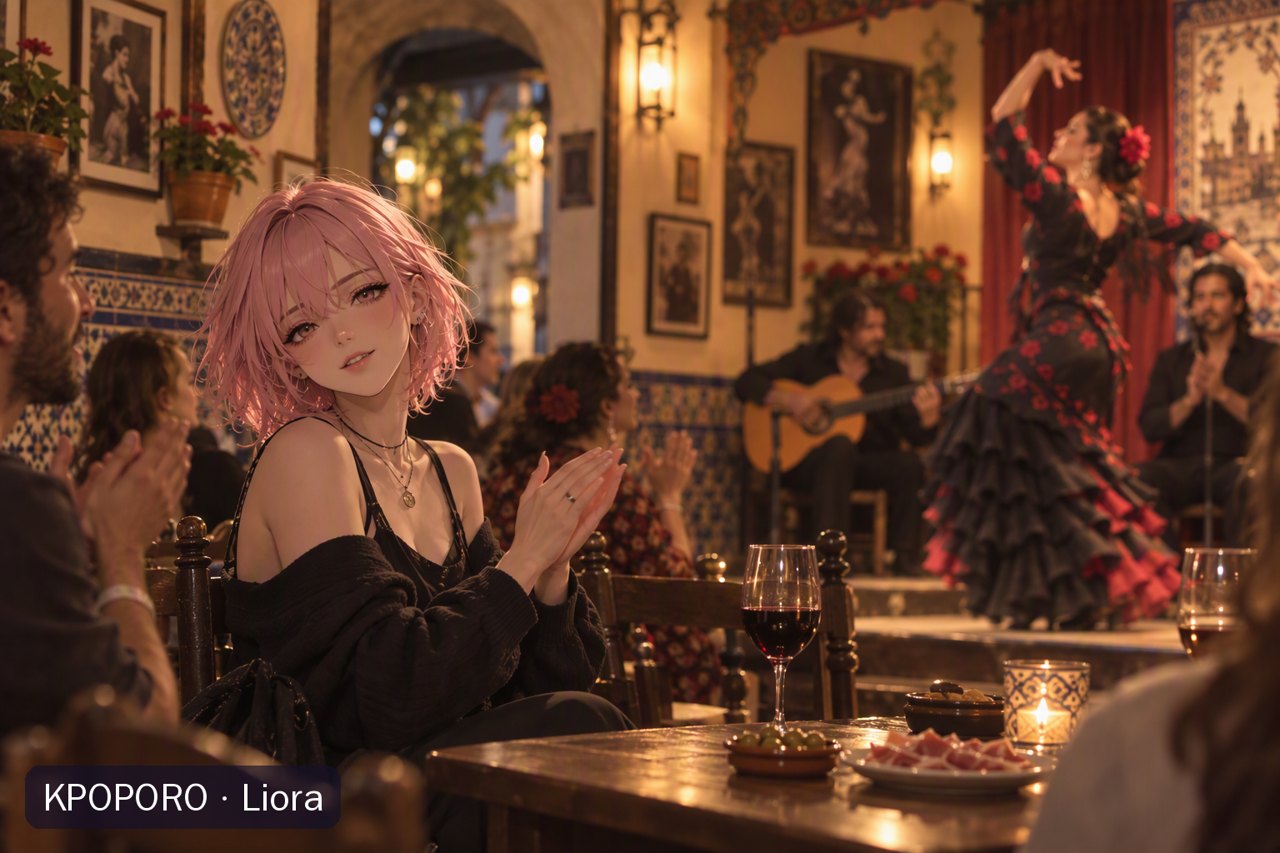
What it is: flamenco, the song, guitar and dance tradition of Andalusia, is listed by UNESCO as intangible cultural heritage, and Seville is one of its home cities. You can see it in large dinner theaters, but many travelers remember the small venues most: a narrow room, a guitarist, a singer, a dancer close enough that you hear every heel strike, and the audience clapping the rhythm (palmas) along with the performers.
Getting there: shows run in the old center around Santa Cruz and across the river in Triana, the historic neighborhood of potters and flamenco families. Both are walkable from most central hotels. Seville also has a flamenco dance museum with evening performances, a good choice for first-timers who want some background.
Best time: evening. Most venues have one or two shows a night and the smaller ones sell out, especially on weekends and in spring festival season, so book a day or two ahead.
Tips: check whether the ticket includes a drink and how long the show lasts (often around an hour). Do not clap along unless the performers invite it, because the rhythms are complex and loud clapping off-beat disturbs them. Many venues ask guests not to film or to keep phones away during the performance, so enjoy it in the moment.
2. Barceloneta beach at sunset
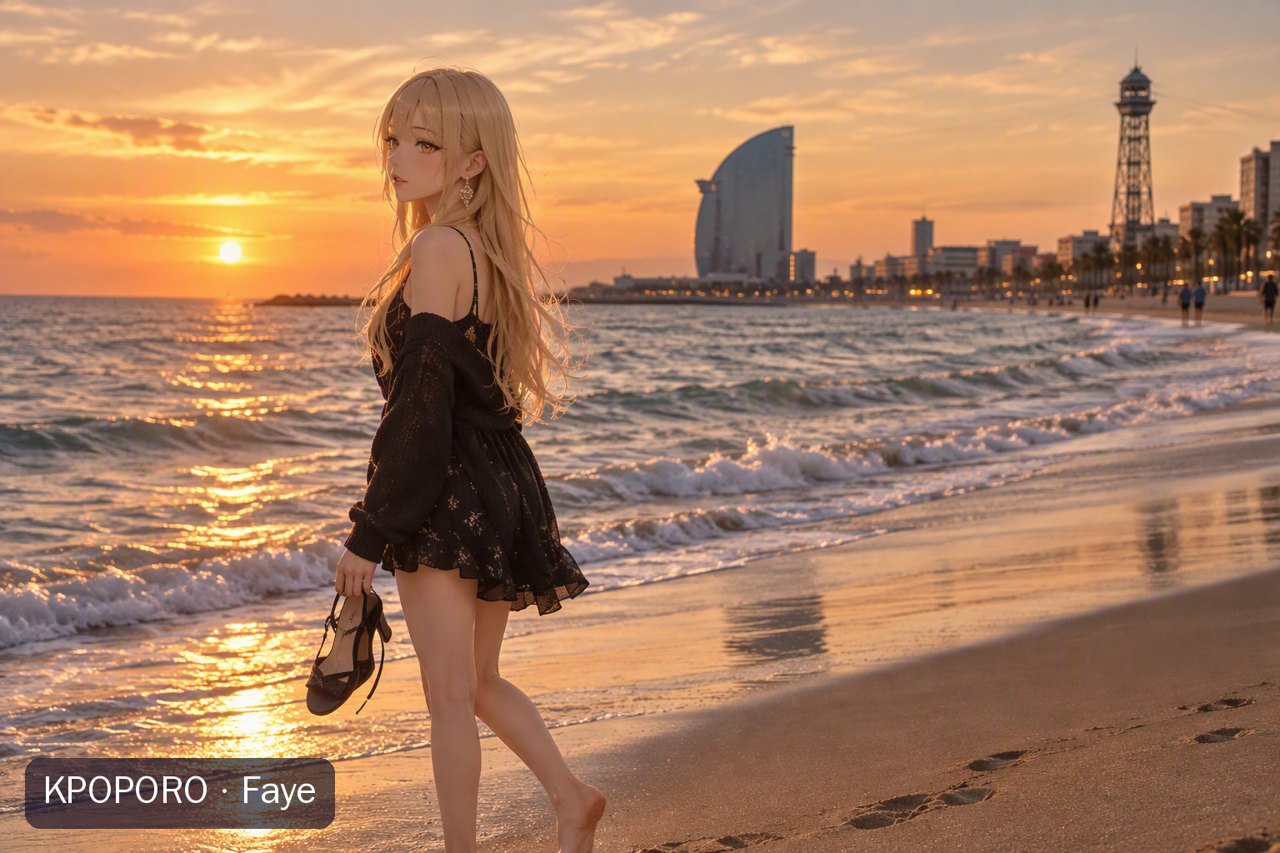
What it is: Barceloneta is the former fishermen's quarter of Barcelona, a grid of narrow streets and laundry-hung balconies next to the sea. Its long sandy beach, rebuilt along with the whole waterfront for the 1992 Olympic Games, is the city's easiest escape: a promenade for walking, cycling and people-watching, seafood restaurants behind it and the sea right in front.
Getting there: Barceloneta metro station (Line L4) is about a ten-minute walk from the sand; you can also walk down from the Gothic Quarter or the Born through the old port area in around 20 minutes.
Best time: late afternoon into sunset, when the heat drops and the light turns warm. In autumn the water is still mild for a paddle and the summer crowds are gone.
Tips: pickpocketing is a known problem on busy beaches and the promenade, so keep bags closed and never leave things on the sand while swimming. The neighborhood streets behind the beach are the place for a traditional seafood rice or tapas meal; restaurants right on the promenade are often pricier. Walk north along the shore for calmer beaches.
3. The patios of Córdoba
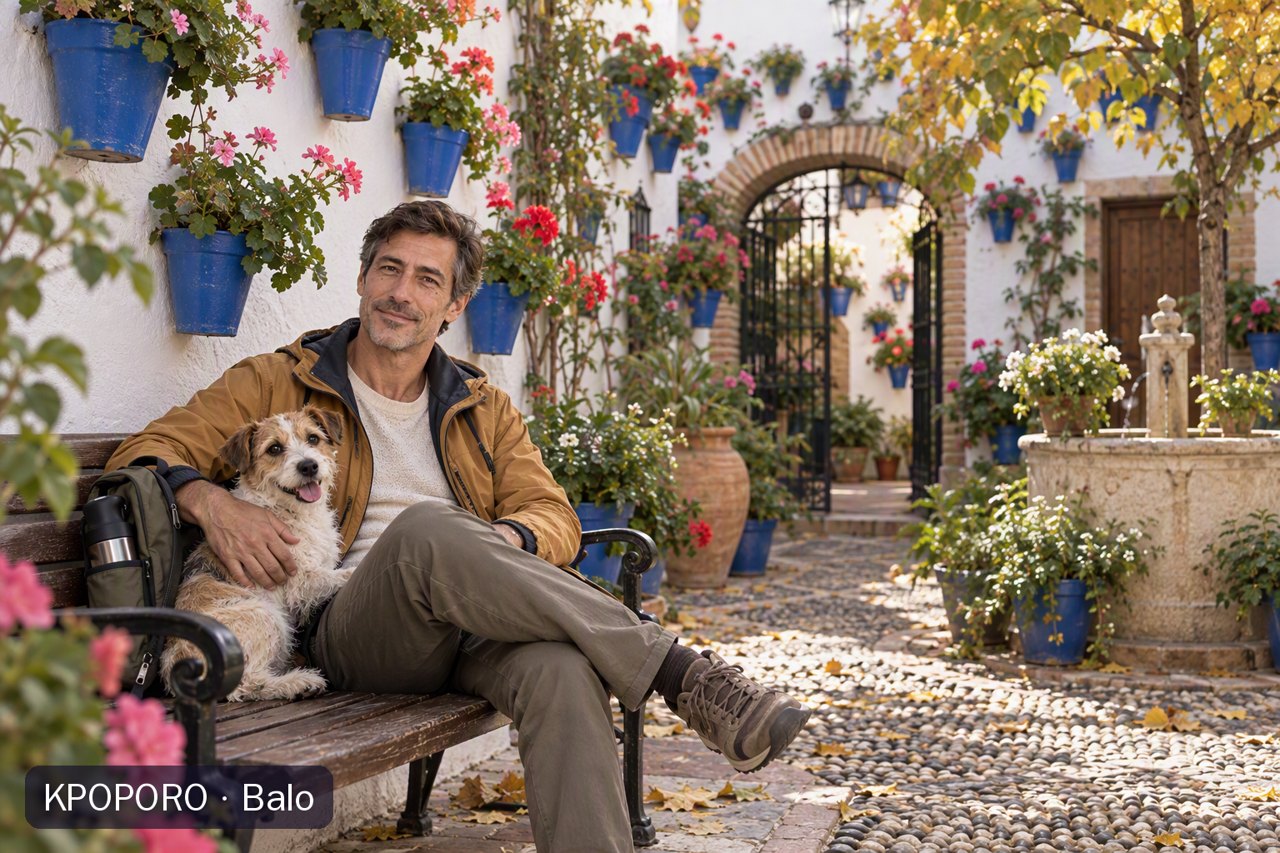
What it is: Córdoba, between Seville and Madrid, is famous for the Mezquita-Catedral, a vast former mosque with a forest of striped arches and a cathedral built inside it. Just as memorable are the city's patios: private courtyards in the old houses, their white walls covered with blue flower pots and plants. Every May the city holds its Patios Festival, when residents open the courtyards to visitors and compete for prizes; the festival is also listed by UNESCO as intangible heritage.
Getting there: high-speed trains run from Seville Santa Justa to Córdoba in roughly 45 minutes to an hour, which makes it an easy day trip. From Córdoba station, the historic center is about a 20 to 30 minute walk or a short taxi ride.
Best time: the festival in May is the peak; outside it, some patios open year-round as small visitor sites or as part of local tours, and the Palacio de Viana has a series of courtyards you can visit. Mornings are cooler and calmer; summer afternoons in Córdoba are among the hottest in Spain.
Tips: visit the Mezquita early, when lines are shortest; check the official site for current hours and any free early-morning entry. The San Basilio and Santa Marina neighborhoods have many of the classic patios. During the festival, follow the official map and be respectful: these are homes.
Putting it together
- Barcelona: keep one late afternoon free for Barceloneta after a day of Gaudí sights.
- Seville base: spend two or three nights, with one evening for flamenco and one day for Córdoba by train.
- Trains: Spanish high-speed tickets are often cheaper when booked early; compare operators on the same route.
- Pace: dinner in Spain starts late, often after 20:30, so plan shows and meals around that rhythm.
Our fictional POPORO CITY characters show the mood of each place: Liora clapping along in a small flamenco bar, Faye walking barefoot at sunset, and Balo, a veterinarian character, resting in a courtyard full of blue pots. For Barcelona, Ronda and Seville in more detail, go back to the main Spain guide.
More travel planning: POPORO BLOG. Our characters also share Korean-language trip notes on the KPOPORO Naver blog.