One Day on the JR Nara Line: Fushimi Inari at Dawn, a Kyoto Temple Garden and Matcha in Uji
Photos in this guide are AI-generated images of fictional POPORO CITY characters, made to illustrate the places; they are not real travel photos. Opening hours, prices and transport details change, so please check official sources before you go.
Kyoto in autumn is beautiful and crowded, and the trick is timing and geography. One train line, the JR Nara Line from Kyoto Station, links three of the best experiences in the area within half an hour: Fushimi Inari Shrine, the temple gardens around Tofukuji and the tea town of Uji. This day route works as a spin-off from our Kansai travel guide and fits easily into a stay in Kyoto or Osaka.
1. Fushimi Inari at dawn
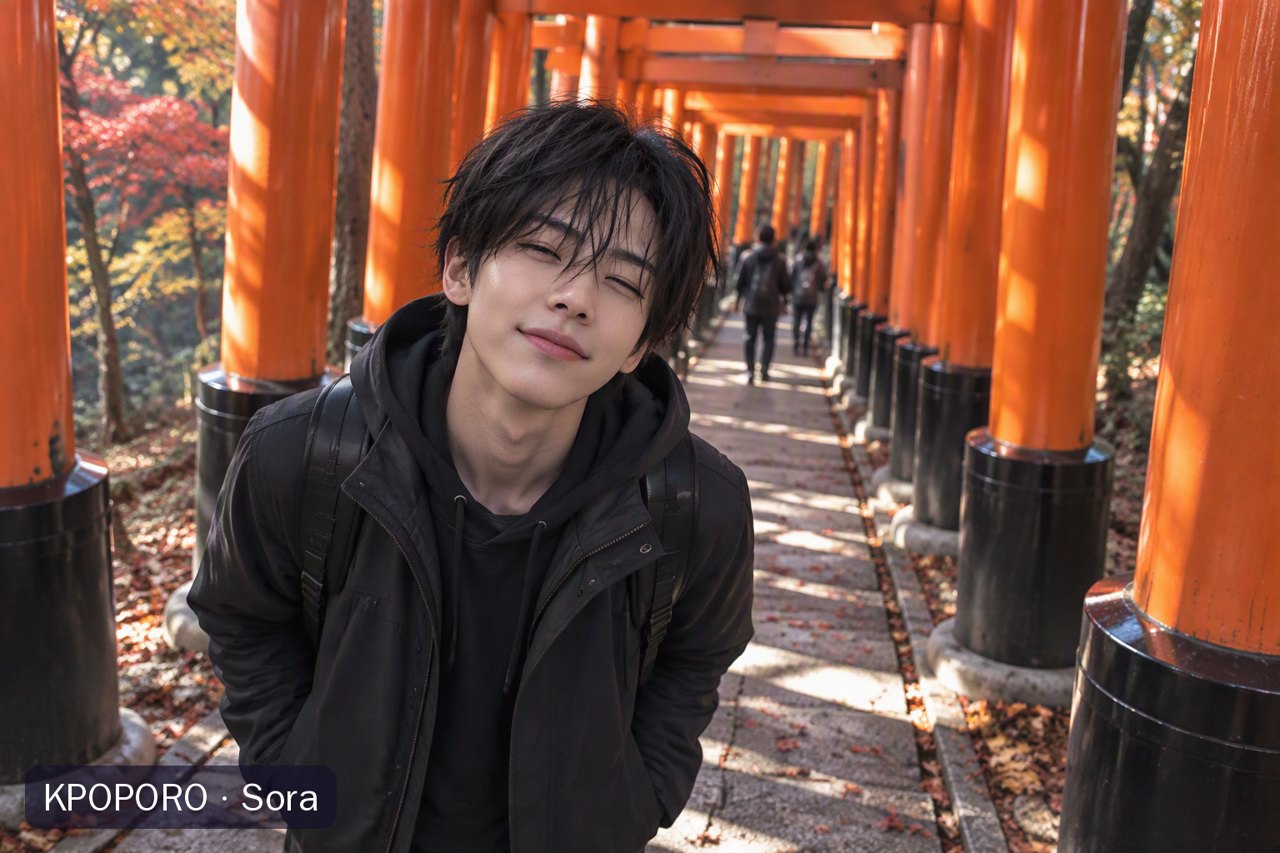
What it is: Fushimi Inari Taisha is the head shrine of Inari, the deity of rice and prosperity. Its famous paths of thousands of vermilion torii gates, donated by businesses and individuals, climb the wooded slopes of Mt. Inari. Fox statues, Inari's messengers, guard the shrines along the way.
Getting there: JR Inari Station is two stops (about five minutes) from Kyoto Station on the JR Nara Line, and the shrine gate is right across the road. Keihan Fushimi-Inari Station is also close.
Best time: as early as possible. The shrine grounds are open around the clock and entry is free, and in the first hour after sunrise the famous Senbon Torii section is calm enough to walk without crowds.
Tips: the full loop to the summit takes two to three hours with stairs; the Yotsutsuji intersection, about halfway, has a wide view over southern Kyoto and is a good turning point. Bring water and comfortable shoes.
2. A temple garden in autumn color
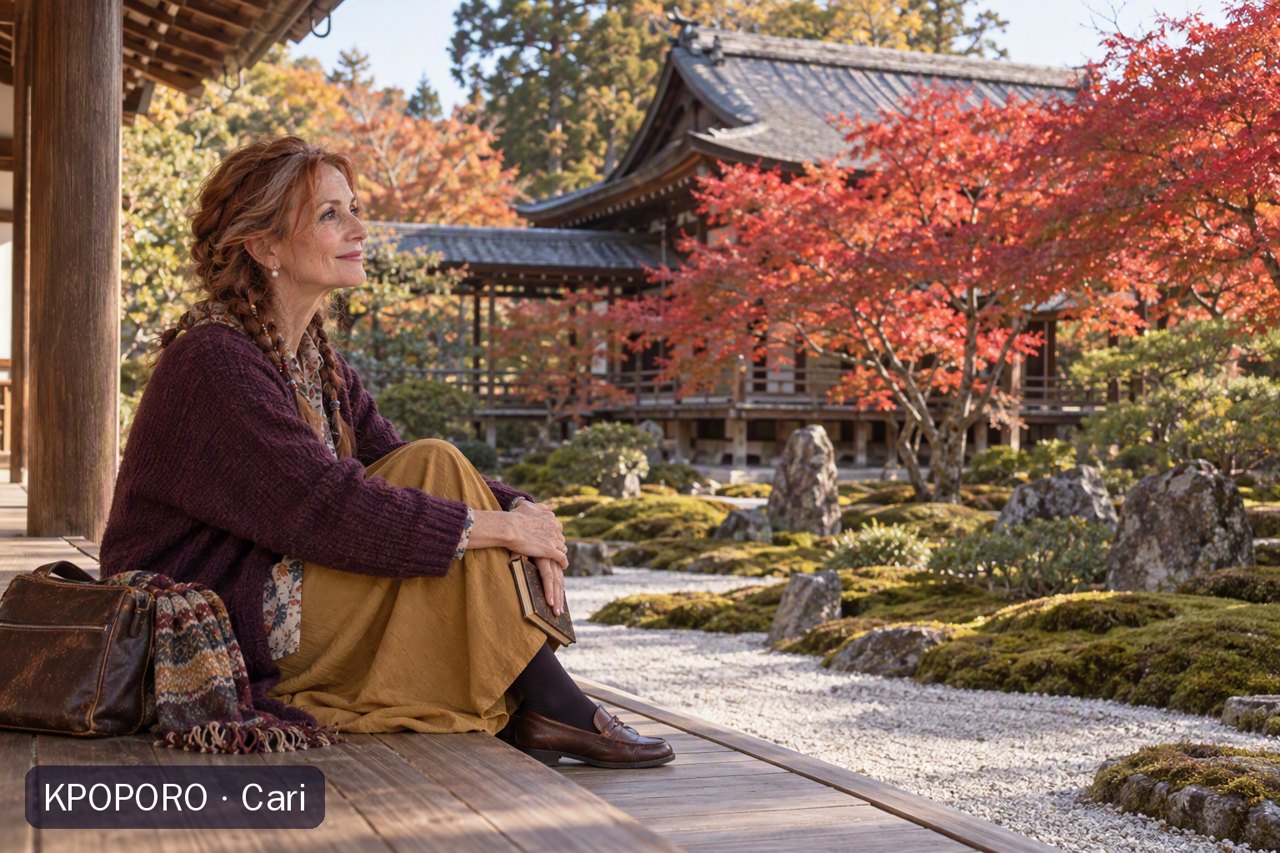
What it is: Kyoto's Zen temples are known for their gardens: raked gravel, moss and maples arranged to be viewed from a wooden veranda. The closest famous example on this route is Tofukuji, one stop back toward Kyoto at JR Tofukuji Station, whose wooden Tsutenkyo bridge looks over a valley of maples, and whose Hojo gardens show both modern and classical design. Sitting on a veranda and simply looking is the point.
Getting there: JR Tofukuji Station is one stop from Inari, or a 15 to 20 minute walk.
Best time: autumn color in Kyoto usually peaks from mid to late November, when Tofukuji is extremely busy; going right at opening time helps. Outside peak season the gardens are peaceful and moss is at its greenest after rain.
Tips: separate fees often apply for the bridge area and the gardens, and some temples restrict photography on the veranda during peak days. Take off your shoes where indicated and keep voices low.
3. Matcha and Byodoin in Uji
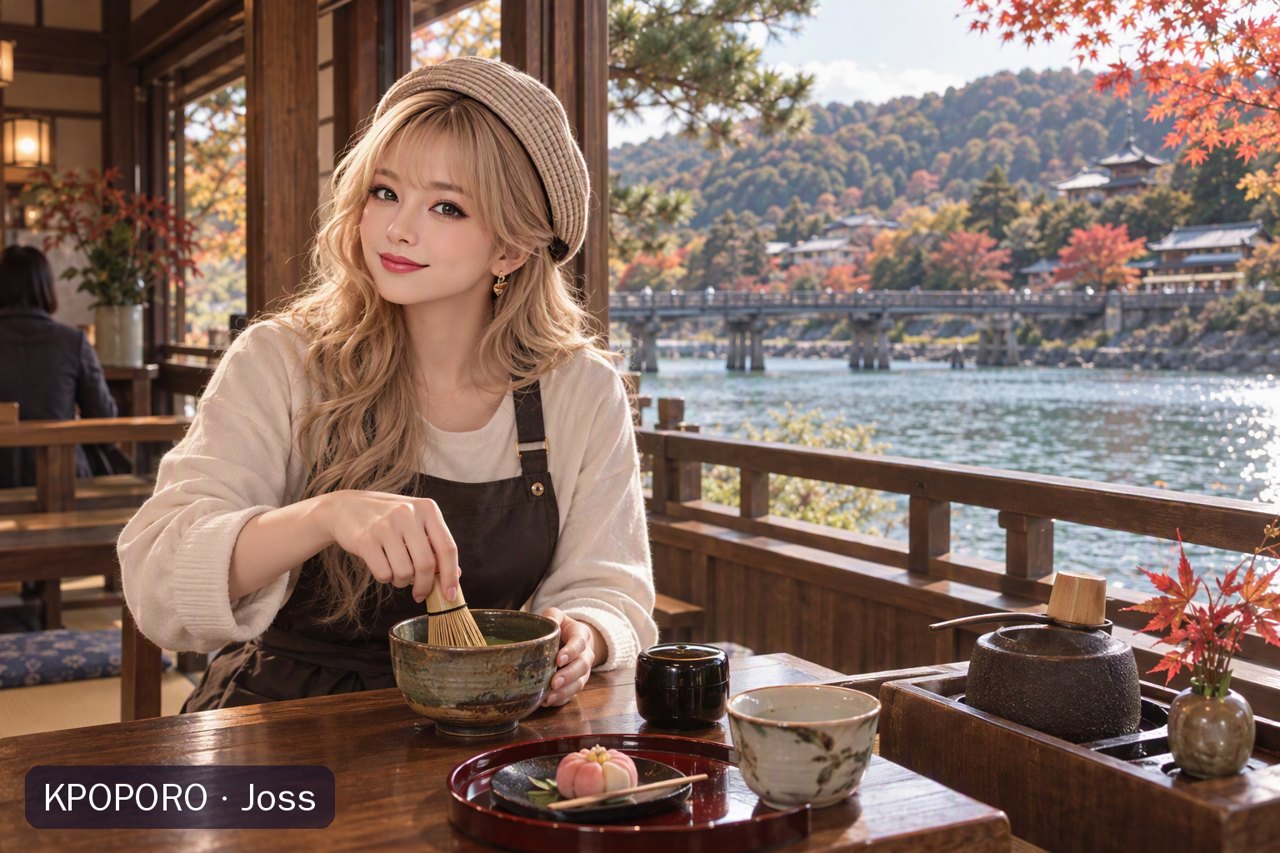
What it is: Uji, between Kyoto and Nara, has grown tea for centuries and is a name every Japanese tea lover knows. The riverside streets near the station are full of tea shops where you can drink matcha, try matcha sweets or join a short tea experience. Across the street from the shops, Byodoin's Phoenix Hall, a temple building from the eleventh century reflected in a pond, is the image on the Japanese ten-yen coin.
Getting there: continue south on the JR Nara Line to JR Uji Station, around 20 to 30 minutes from Kyoto depending on the train type; the Keihan Uji Line is an alternative from Fushimi-Inari.
Best time: afternoon, after the morning at Inari and Tofukuji. Tea harvest season in late spring is special, and autumn leaves along the Uji River make a gentle walk.
Tips: Byodoin's Phoenix Hall interior has a separate timed tour that can sell out on busy days. Uji is also linked to the final chapters of The Tale of Genji, and the town has a small museum on it. Matcha soft-serve is the classic street snack; good tea shops also sell powdered matcha in small tins that pack well.
Putting it together
- Sunrise to about 9:00: Fushimi Inari, up to Yotsutsuji and back.
- Late morning: Tofukuji gardens (or a smaller temple if Tofukuji is packed).
- Lunch and afternoon: Uji, tea, Byodoin and the riverside walk.
- Evening: back to Kyoto, or on to Nara by the same line if you are staying there.
An IC card such as ICOCA covers all the trains on this route. Our fictional POPORO CITY characters show the mood: Sora walking up through the morning torii, Cari, a librarian character, sitting in front of the moss and maples, and Joss, a cafe-owner character, learning to whisk matcha by the river. For Osaka, Nara and Kobe, see the main Kansai guide.
More travel planning: POPORO BLOG. Our characters also share Korean-language trip notes on the KPOPORO Naver blog.